
may 2026
NADIA CURTO
Nadia represents the vibrant future of Piemontese winemaking, standing as a vital bridge between the storied traditions of the past and a modern, terroir-driven philosophy. Located in the heart of La Morra, Nadia’s heritage is deeply rooted in the prestigious Arborina Cru, where she learned the craft under the guidance of her father, Marco Curto, and her legendary uncle, Elio Altare. This dual mentorship allowed her to master the "Modernist" movement’s precision while retaining the soulful, patient approach of the traditionalists. Today, her winemaking direction is defined by a commitment to sustainable viticulture and minimal intervention, ensuring that the Nebbiolo grape remains a transparent vessel for the soil.
Fruit expression is more important than terroir here: Nadia’s wines are the closest thing to eating a handful of beautifully ripe grapes you can experience. One of the best visits in the Langhe, the cellar is filled with “good vibes” and Nadia’s laugh will remind you of what wine used to be and should be: a great excuse to get together, share some good stories and enjoy everyone’s company.
Our selection and three words from the winemaker:
- Barolo La Foia: Funny, Genuine, Compulsive. Drink now - 2036
- Informale: Refined, versatile, layered. Drink now
- Nebbiolo: Extroverted, satisfying, enveloping. Drink now - 2030
MARCO RIVA
Another super tiny project from Roero. Marco Riva is a travelling Sommelier who after Oltrepò Pavese and Franciacorta ended up in Piemonte, where he decided to finally put down some roots.
If you’ve spent any time following our journey at One on the Hill, you know we have a soft spot for the "feral" side of Piemonte—those steep, sandy hills of the Roero where the woods still outnumber the vines. Marco Riva is the personification of this landscape. A young, talented winemaker who is far more comfortable in his work boots among the rows than behind a desk. While many producers aim for a "perfect" technical score, Marco chases the soul of the vintage. He’s a craftsman who understands that winemaking is an exercise in humility; as he often says, you have to make peace with nature’s rhythm and know when to step back to let the terroir speak.
"What I mean by a philosophy of wine—or rather, of the product itself—is something that lives within us. It’s what drives us to shop from small-scale producers, the charm we find in tasting a particularly fine cheese or cured meat, and the desire to visit a beautiful place that lies beyond the boundaries of our own little backyard."
Our selection and three words from the winemaker:
- Roero Rosso: intense, deep, layered. Drink now
- Nebbiolo d'Alba: fruity, fresh, complex. Drink now
- Roero Bianco: Mineral, elegant, salty. Drink now
SOPRAVVENTO
“Sopravvento” means “Upper Hand”, referring to the fact that passion for wine had the upper hand on us, we quit our jobs and started our journey as wine producers. We wanted to start making our own wines, telling our own stories. Plants share such an amazing energy.”
Michele and Matteo, two brothers from Alto Piemonte. Both Somms, working at high level Michelin Star restaurants between Torino and London, decide to quit their jobs to make wine in Carema.
They buy small plots, terraced, steep, by old farmers in the area who are happy to see a new generation stepping in. Some plots are raw, abandoned vineyards which they bring back to life.
The first harvest is in 2022 with one single barrel of Nebbiolo “Heroes”, in honor of the heroic viticulture of this alpine region of Piemonte. Low-intervention winemaking, everything farmed by hand on tough vineyards, from a region that is quickly gaining a lot of attention from the wine world. This is one of the tiniest and craziest project we have selected so far, the wines are extremely rare so share them with caution!
Our selection and three words from the winemaker:
- Changes: Fresh, Fruity, Pure. Drink now - 2030
- Carema Heroes: Elegant, Fine tannin, Complex Bouquet. Drink now - 2034
- Rebel Rebel: Barrell fermented, Toasted, Aged on lees. Drink now - 2030
MURAMURA
Guido and Federico were looking for the best vanilla in Madagascar for their gelato project when they encountered the expression “Mura Mura” in 2006: Slowly-slowly, without rush, became the name of their winery 20 years later.
From creating and running one of the best gelato brands in the world, they went back to their roots in Monferrato with the most interesting project the region has seen in years. A state of the art winery producing fresh, fruit and terroir driven wines, a restaurant focusing on sustainability and a relais with literature-themed rooms. Mura Mura is an entire world in a small, lush and biodiverse valley in Monferrato.
Winemaking is big on ceramics and neutral oak, for a respectful, mura-mura, slow evolution. The experience Guido and Federico have gathered over the years with fruit growing and transformation in gelato is impressive: Guido told me they used to grow 20 different types of apricot and peach varietals to select the best ones for the flavor. The transfer of these skills over wine is an absolute rarity in our field, I’m excited to see what the next vintages will bring but in the meantime enjoy these gems!
Our selection and three words from the winemaker:
- Barbaresco Iago: Drink now - 2036
- Grignolino: Drink now - 2030
- Mercuzio Nebbiolo: Drink now - 2030
LEGEND
DRINK NOW: Means drink within the next 3-4 years.
ALL DATES: Are just a reference point. Wine is not going to go bad, it’s just my personal favorite drinking window.
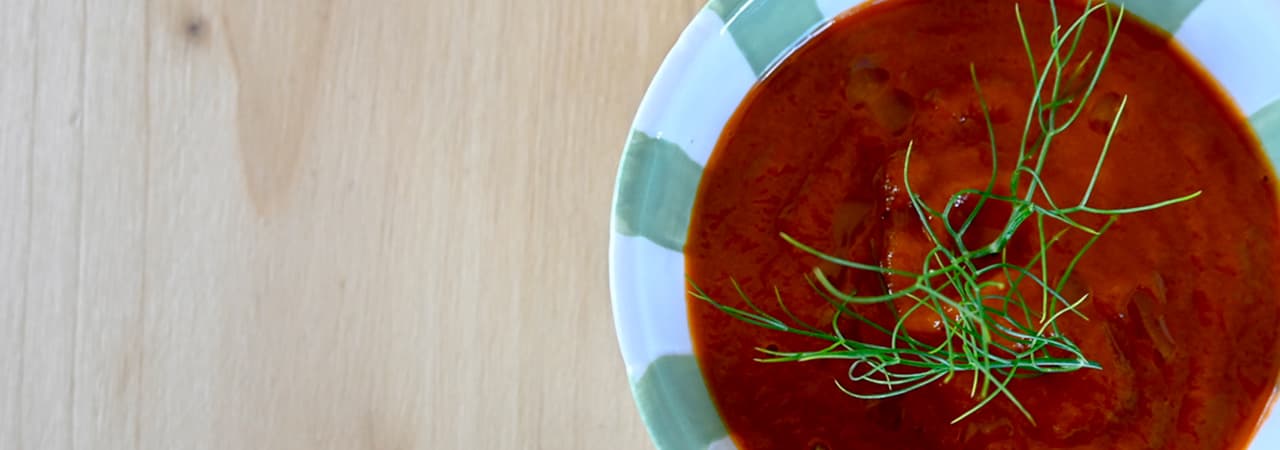
Piedmontese salsa Rubra
What you need:
- - 2 pounds ripe tomatoes, peeled and seeded
- - 2 large red bell peppers
- - 1 medium yellow onion, finely chopped
- - 2 garlic cloves, minced
- - 3 tablespoons extra-virgin olive oil
- - 2 tablespoons granulated sugar
- - 3 tablespoons red wine vinegar
- - 1 teaspoon fine salt
- - 0.3 teaspoons black pepper, freshly ground
How it is done:
Roast the peppers: Roast 2 large red bell peppers directly over a gas flame or under the broiler, turning occasionally, until the skin is charred all over, about 10–12 minutes.
Place in a bowl, cover with plastic wrap, and let steam for 10 minutes. Peel, seed, and roughly chop.
Soften the onion: In a heavy-bottomed saucepan, warm 3 tablespoons extra-virgin olive oil over medium heat. Add 1 medium yellow onion, finely chopped and cook, stirring occasionally, until soft and translucent, about 9 minutes.
Add 2 garlic cloves, lightly pressed 1 minute more.
Combine and season: Add the chopped tomatoes and roasted peppers to the pan. Stir in 2 tablespoons granulated sugar, 3 tablespoons red wine vinegar, 1 teaspoons fine salt, and 0.3 teaspoons black pepper, freshly ground. Bring to a gentle simmer.
Simmer down: Cook uncovered over low heat, stirring occasionally, until the sauce is thick and jammy and most of the liquid has evaporated, about 45–50 minutes
Remove from heat. Remove the garlic cloves and use an immersion blender to blend the sauce to a smooth consistency. Taste and adjust salt, sugar, or vinegar as needed. Let cool before serving.
How to serve:
You can use this sauce as you use ketchup, it goes great with barbecued meat, or with a steak.
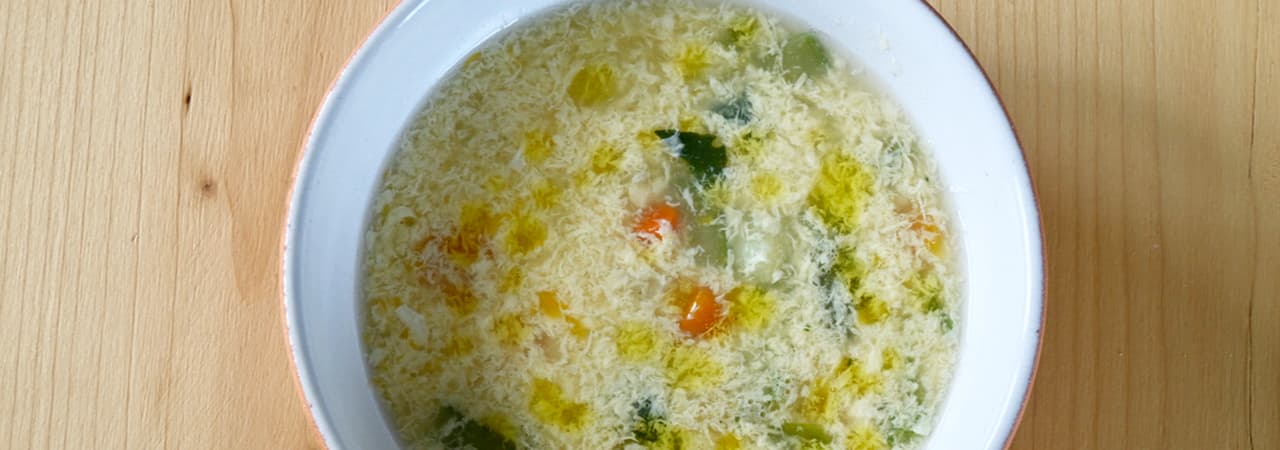
Piedmontese Stracciatella Soup
What you need:
- - 6 cups rich beef or capon broth (homemade preferred)
- - 4 large eggs
- - 0.5 cups Parmigiano Reggiano, freshly grated
- - 2 tablespoons fine semolina flour
- - 1 celery stalk
- - 1 zucchini
- - 1 yellow onion
- - 0.3 teaspoons nutmeg, freshly grated
- - 1 teaspoons lemon zest (optional)
- - 0.5 teaspoons fine salt
- - 0.3 teaspoons black pepper, freshly ground
How it is done:
In a pot, sear the vegetables roughly cut, keep going until golden brown. Pour 6 cups rich beef or capon broth (homemade preferred) into a large saucepan and bring to a steady, gentle boil over medium-high heat. Taste and adjust salt if needed — a well-seasoned broth is the foundation of this dish.
Prepare the egg mixture: In a bowl, whisk together 4 large eggs, 0.5 cups Parmigiano Reggiano, freshly grated, 2 tablespoons fine semolina flour, 0.3 teaspoons nutmeg, freshly grated, and 1 teaspoons lemon zest (optional) (if using). Season with 0.5 teaspoons fine salt and 0.3 teaspoons black pepper, freshly ground. Whisk until smooth and well combined. Once the broth is boiling, reduce the heat to medium. Pour the egg mixture into the broth in a slow, steady stream while stirring constantly and vigorously with a whisk or fork. The eggs will set into soft, irregular shreds (stracciatelle) within about 2 minutes.
How to serve:
Remove from heat immediately once the eggs have set. Ladle into warm bowls and finish with an extra dusting of freshly grated Parmigiano and a pinch of nutmeg. Serve at once.
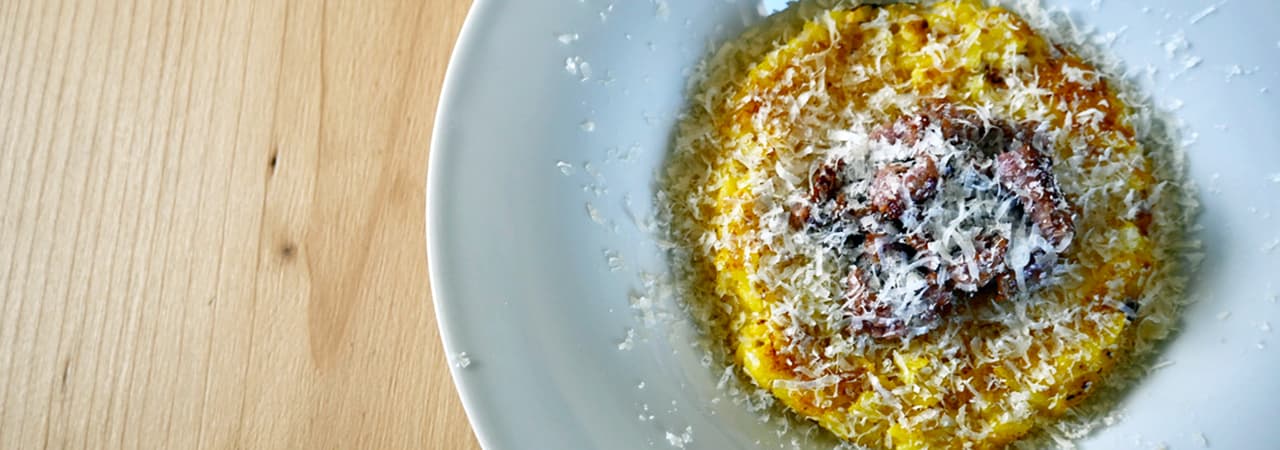
Riso al Salto with Toasted Sausage
What you need:
- - 4 cups cold leftover risotto (day-old, well chilled we used milanese)
- - 4 Italian pork sausage links
- - 2 tablespoons unsalted butter
- - 0.5 cups Parmigiano Reggiano, freshly grated
- - 0.3 teaspoons black pepper, freshly ground
How it is done:
Toast the sausage: Remove the casings from 4 Italian pork sausage links and break the meat into rough, chunky pieces. Heat a large cast-iron or heavy skillet over medium-high heat with no added fat. Add the sausage pieces and cook, pressing lightly, until well browned and slightly crispy on the outside, about 6–8 minutes.
Remove the sausage with a slotted spoon and set aside, leaving all the rendered fat in the pan.
Build the fat base: Reduce the heat to medium. Add 2 tablespoons unsalted butter to the sausage fat in the pan and let it melt together. You should have a generous layer of cooking fat — this is what will make the rice crust golden and flavorful. Shape the rice cakes: break the leftover risotto into singular grains again, then With a spatula, shape the cold risotto into round flat cakes about 3½ inches wide and ¾ inch thick directly into the pan— one per person, or smaller individual ones. Carefully lay the rice cakes into the hot fat. Do not move them. Cook undisturbed over medium heat until a deep golden crust forms on the bottom, about 7–8 minutes.
Flip once using a wide spatula and cook the other side until equally golden and crisp, another 6–7 minutes.
How to serve:
Plate each rice cake and spoon the sausage pieces generously over the top. Finish with a dusting of Parmigiano and serve immediately.
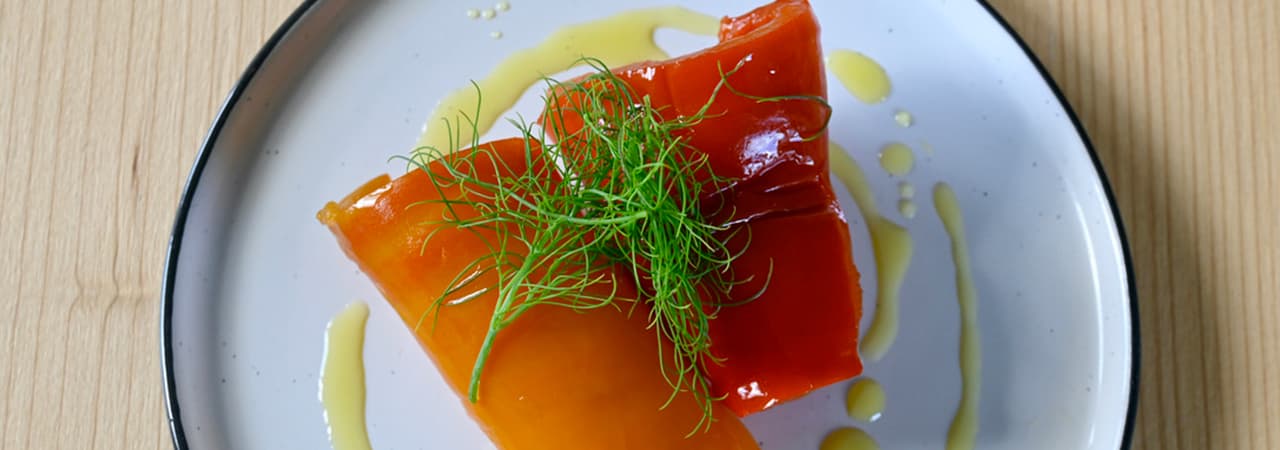
Piedmontese Roasted Pepper Rolls
What you need:
- - 4 large sweet red and yellow bell peppers
- - 2 tablespoons extra-virgin olive oil
- - 7 ounces oil-packed tuna, drained
- - 2 tablespoons tbsp capers in brine, drained and roughly chopped
- - 2 hard-boiled eggs, peeled
- - 1 garlic clove, minced
- - 3 tablespoons fresh flat-leaf parsley, finely chopped
- - 2 tablespoons extra-virgin olive oil (for the filling)
- - 0.3 teaspoons black pepper, freshly ground
- - 0.5 teaspoons fine salt
How it is done:
Roast the peppers: Preheat the oven to 425°F (220°C). Place 4 large sweet red and yellow bell peppers whole on a baking sheet lined with foil. Drizzle with 2 tablespoons extra-virgin olive oil and roast, turning once halfway through, until the skins are blistered and charred in spots, about 35–40 minutes.
Steam and peel: Transfer the roasted peppers to a bowl, cover tightly with plastic wrap, and let steam for 15 minutes. This loosens the skin for easy peeling. Prepare the pepper strips: Peel the peppers carefully. Cut off the tops, open them lengthwise, and remove seeds and membranes. Lay the pepper flesh flat and cut into wide strips, roughly 2–3 inches wide. Pat dry gently with a paper towel and set aside. Make the filling: In a bowl, combine 7 ounces oil-packed tuna, drained, 6 salt-packed anchovy fillets, rinsed, 2 tablespoons tbsp capers in brine, drained and roughly chopped, and 1 garlic clove, minced. Separate the yolks from the whites of 2 hard-boiled eggs, peeled — roughly chop the whites and add them to the bowl. Crumble in the yolks. Add 3 tablespoons fresh flat-leaf parsley, finely chopped and 2 tablespoons extra-virgin olive oil (for the filling). Season with 0.3 teaspoons black pepper, freshly ground and 0.5 teaspoons fine salt. Mix gently with a fork, keeping the texture coarse and rustic.
Roll the peppers: Place a generous spoonful of filling at one end of each pepper strip. Roll up snugly and place seam-side down on a serving platter. Repeat with remaining strips and filling.
How to serve:
Drizzle the finished involtini with a little extra-virgin olive oil. Cover and rest at room temperature for at least 30 minutes before serving, or refrigerate for up to 24 hours and bring back to room temperature before serving.